




Revolutionizing Renewable Energy

Powering the Future with Moving Water

Waterotor’s patented hydrokinetic technology collects clean, affordable energy from moving water, in flows as slow as 2 mph.

Ottawa, Canada. Est. 2011.

Trusted by leading companies and research institutions worldwide.

  • Canadian Hydrokinetic Turbine Test Centre
  • Marine Institute, Memorial University
  • Black and McDonald
  • Design 1st
  • RTS Plastics
  • Nelson
The Technology

Groundbreaking technology. Proven results.

Waterotor’s water power generator collects hydrokinetic power from flowing water with unmatched efficiency and affordability. Engineered to operate in flows as low as 2 mph, it turns rivers, canals, tidal and ocean currents into reliable power, 24 hours a day.

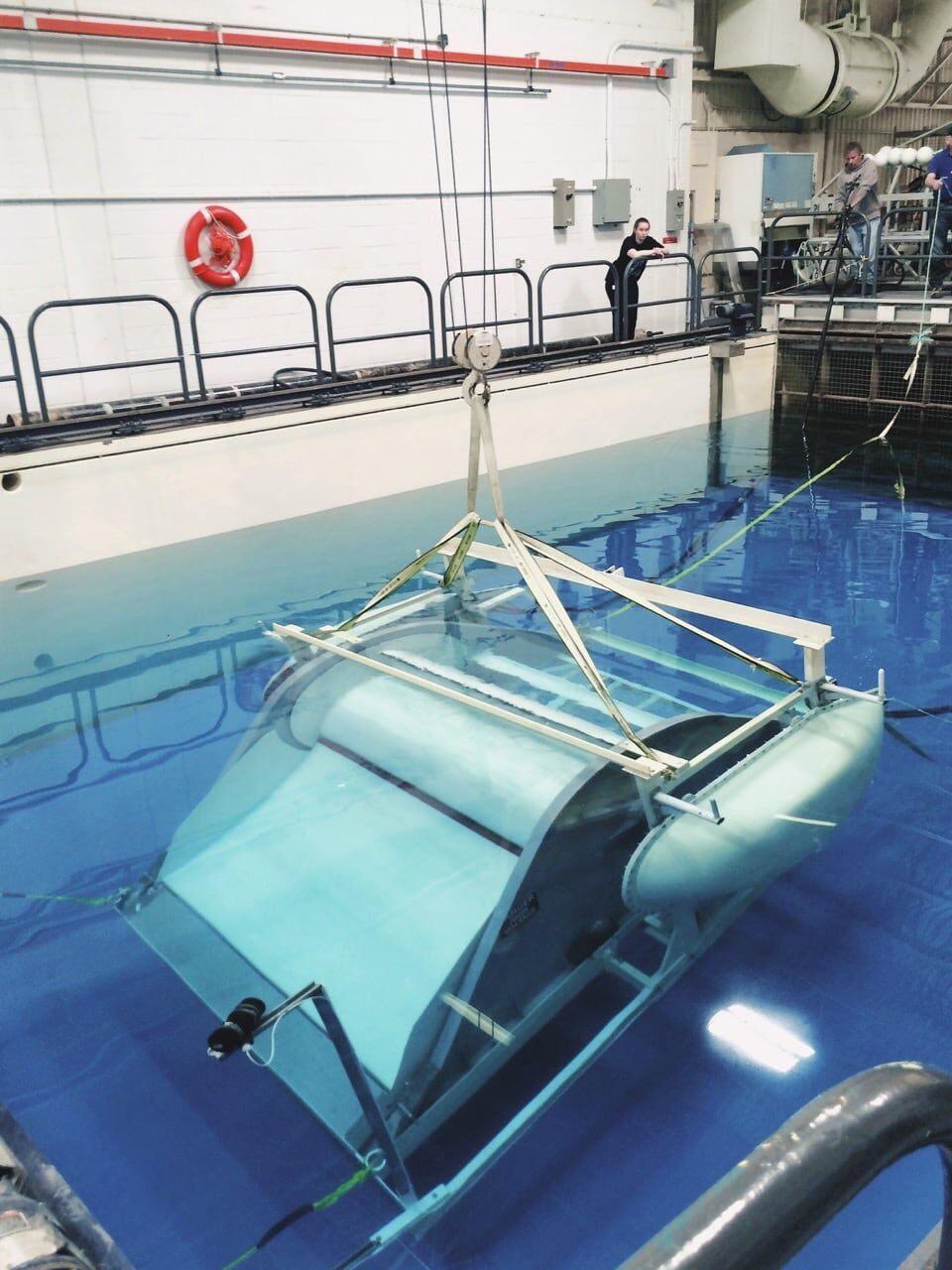
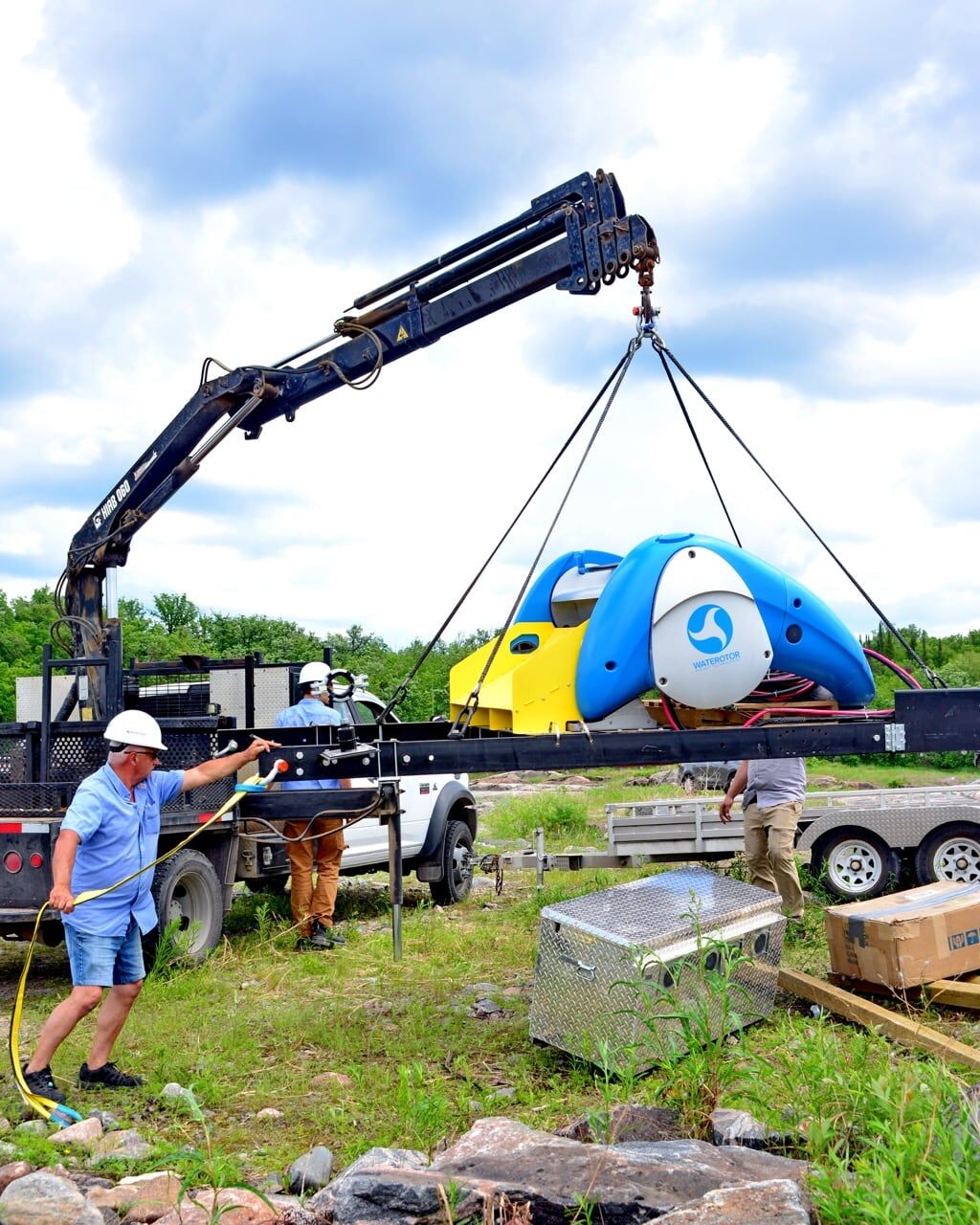
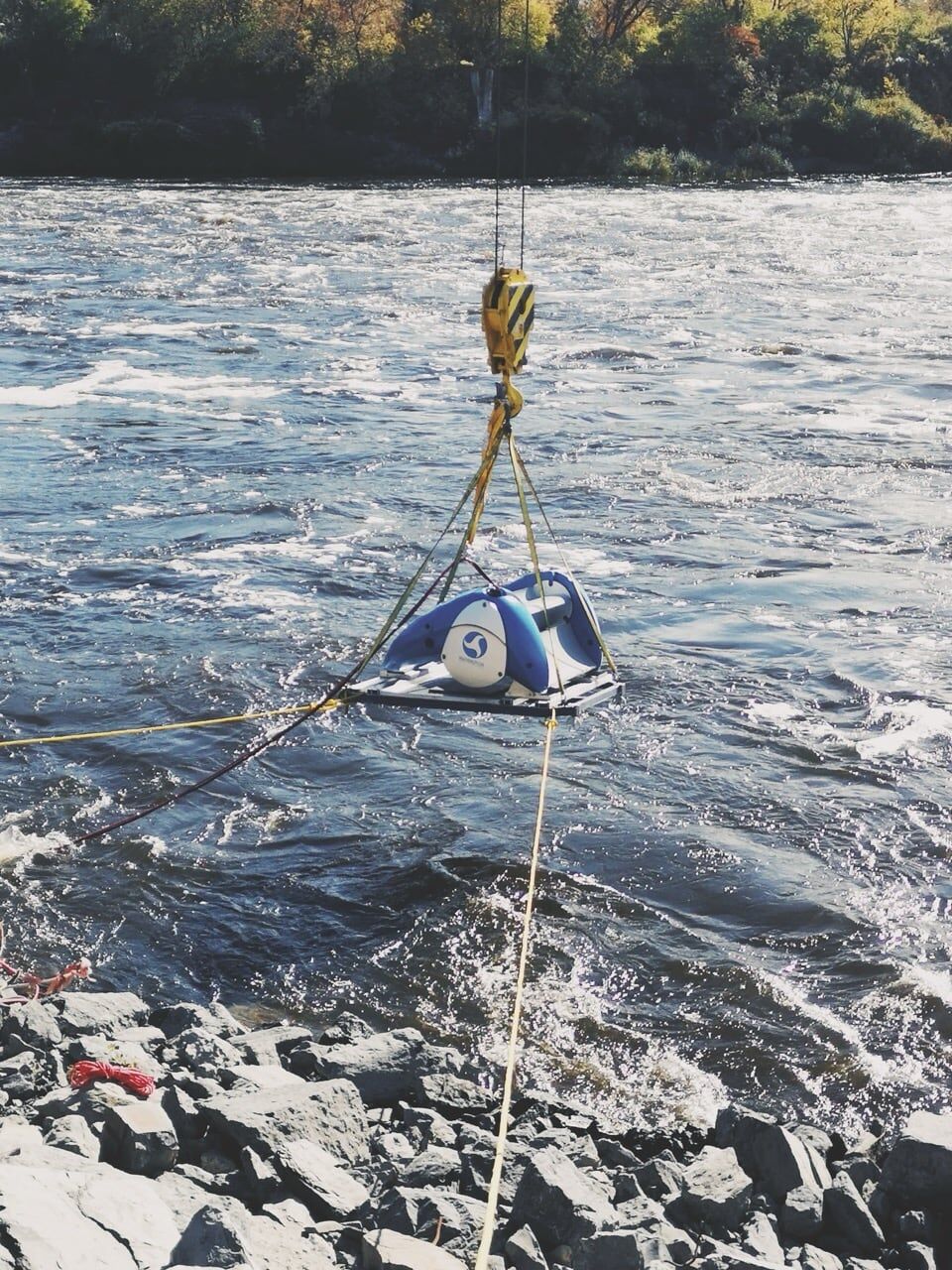
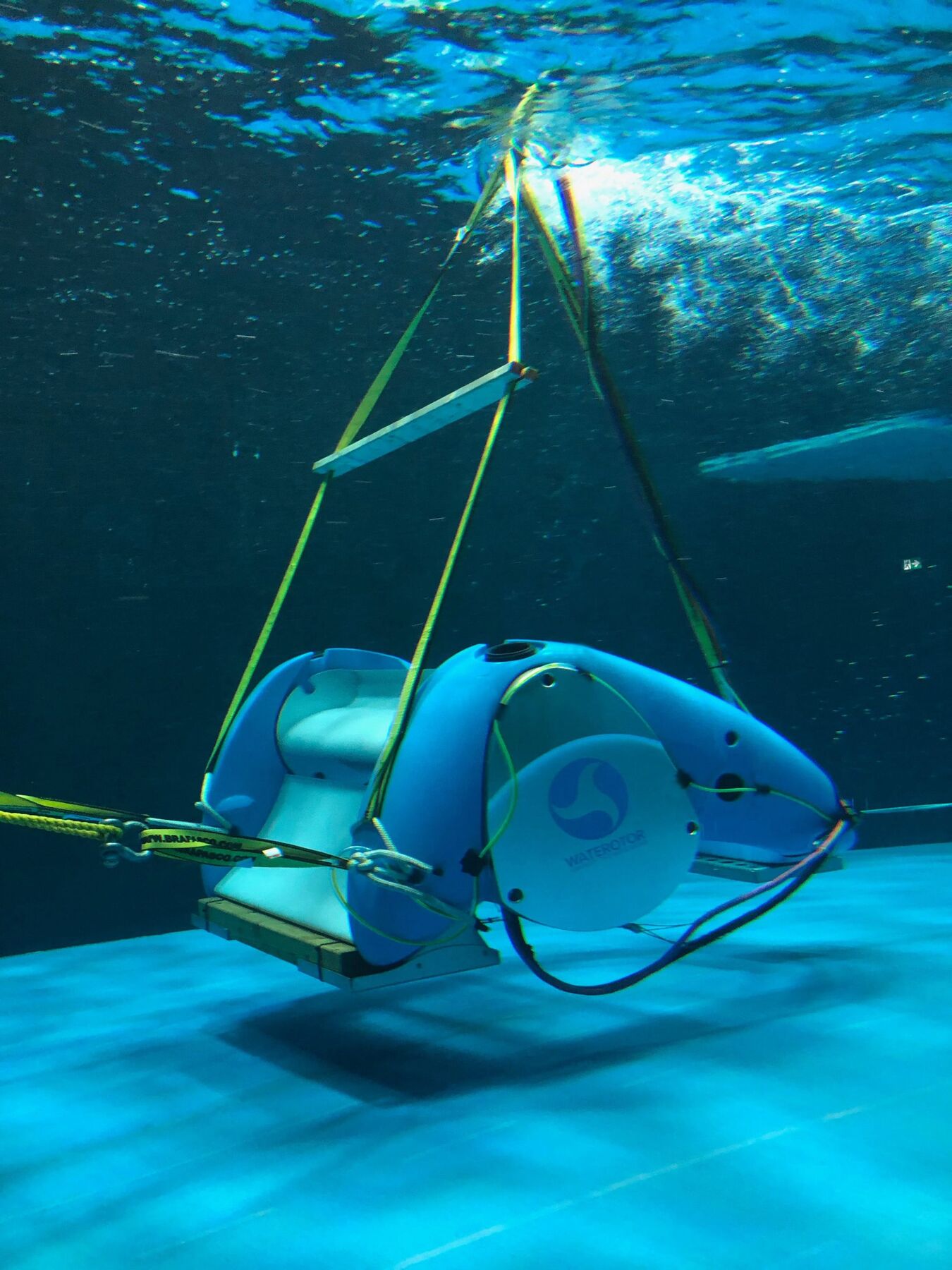
A blue and white Waterotor unit suspended underwater from a lifting frame
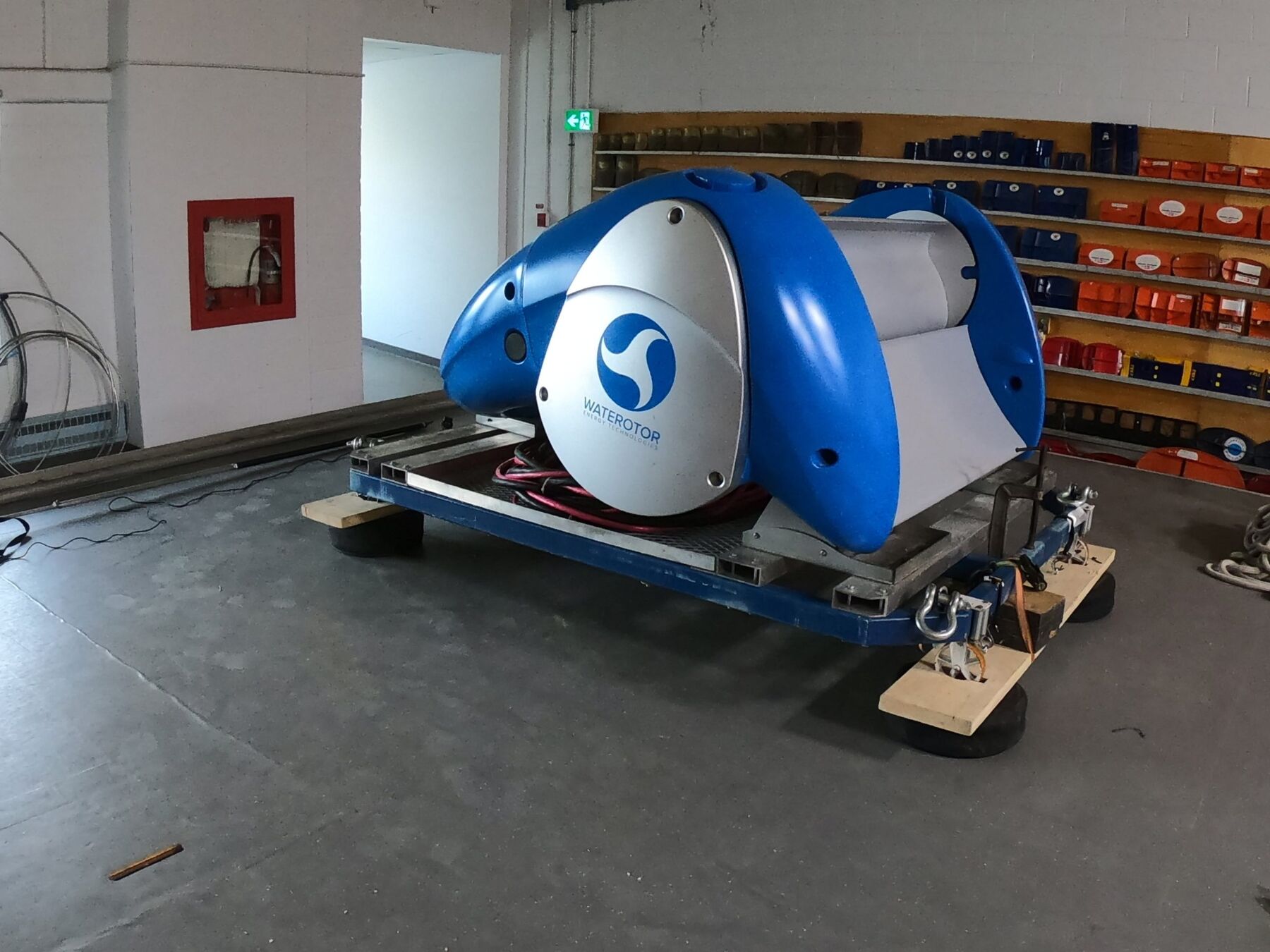
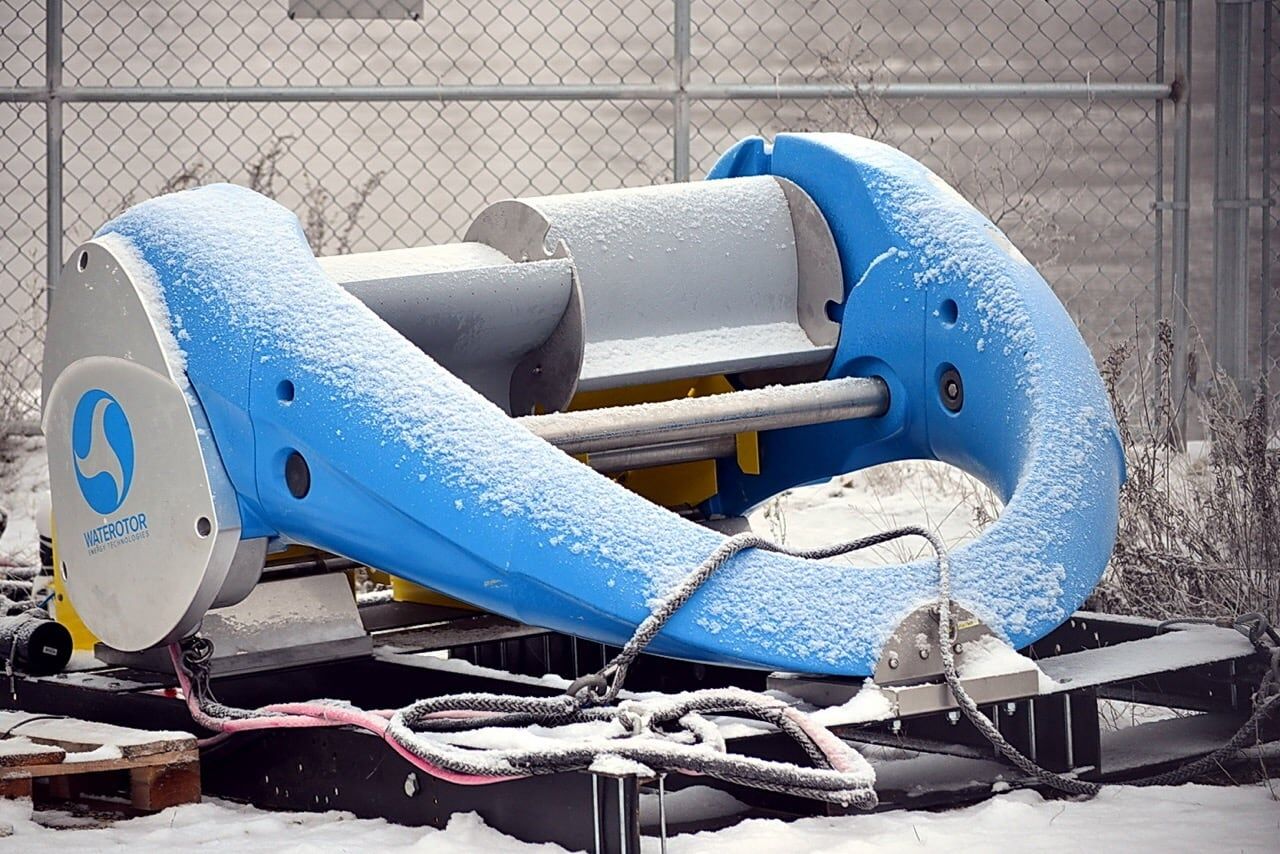
Waterotor units are rotomolded and built to stay submerged in fresh or salt water.
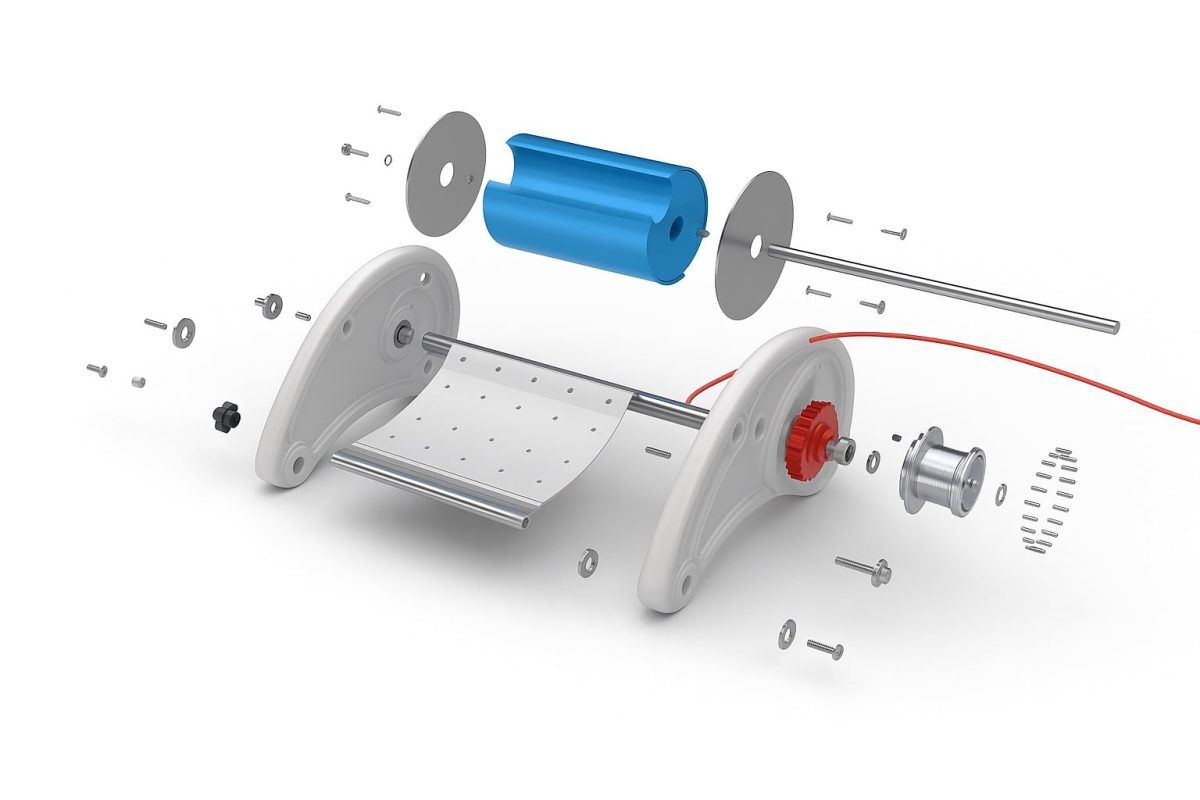
Exploded technical drawing of the Waterotor showing the rotor drum, curved blades, side plates and generator
Exploded view: rotor drum, patented blades and generator.
2mphMinimum water speed needed to generate power
60%Of the energy in moving water captured, at peak
$0.05Per kWh, cheaper than diesel, wind and solar
24/7Continuous generation, with no dependence on sun or wind
  • Up to 60% energy capture

    Efficiently converts up to 60% of the available energy in moving water into electricity.

  • Zero harm to marine life

    No fuel, no emissions and no threat to fish or the ecosystems they live in.

  • Micro to megawatt systems

    From coastal communities to industrial hubs, Waterotor scales to a wide range of energy needs.

How It Works

A new category of rotor design

Our patented blade design captures both lift and drag forces. Using ram pressure and lift together to generate torque, the rotor achieves a remarkably high coefficient of power across every flow speed.

Unlike traditional turbines that need fast currents, Waterotor works where no other solution can. It is lightweight, portable and simple to deploy, which makes it ideal for remote and underdeveloped regions.

Animation: how the Waterotor rotor turns flowing water into torque.
Read a text description of this video

A 3D animation of a Waterotor unit resting on the seabed. Water flows across the rotor, where the curved blades catch both the push of the current and the lift created as water passes over them. The rotor drum turns steadily in the direction of the flow, driving the generator on its side.

  • Low speed capability

    Operates effectively in water speeds as low as 2 mph, where traditional energy solutions cannot.

  • Scalable and modular

    Adapts to different energy and geographic needs, with units that combine into larger arrays.

  • Round-the-clock reliability

    Unlike solar and wind, Waterotor delivers power 24/7 for a consistent green energy supply.

  • Eco-friendly operation

    Built from corrosion-resistant materials, with no dams or disruptive infrastructure required.

Applications

Built for the water we already have

About 70% of the earth is covered in water. The World Energy Council estimates 10,000 terawatt hours a year of unused hydropower potential worldwide.

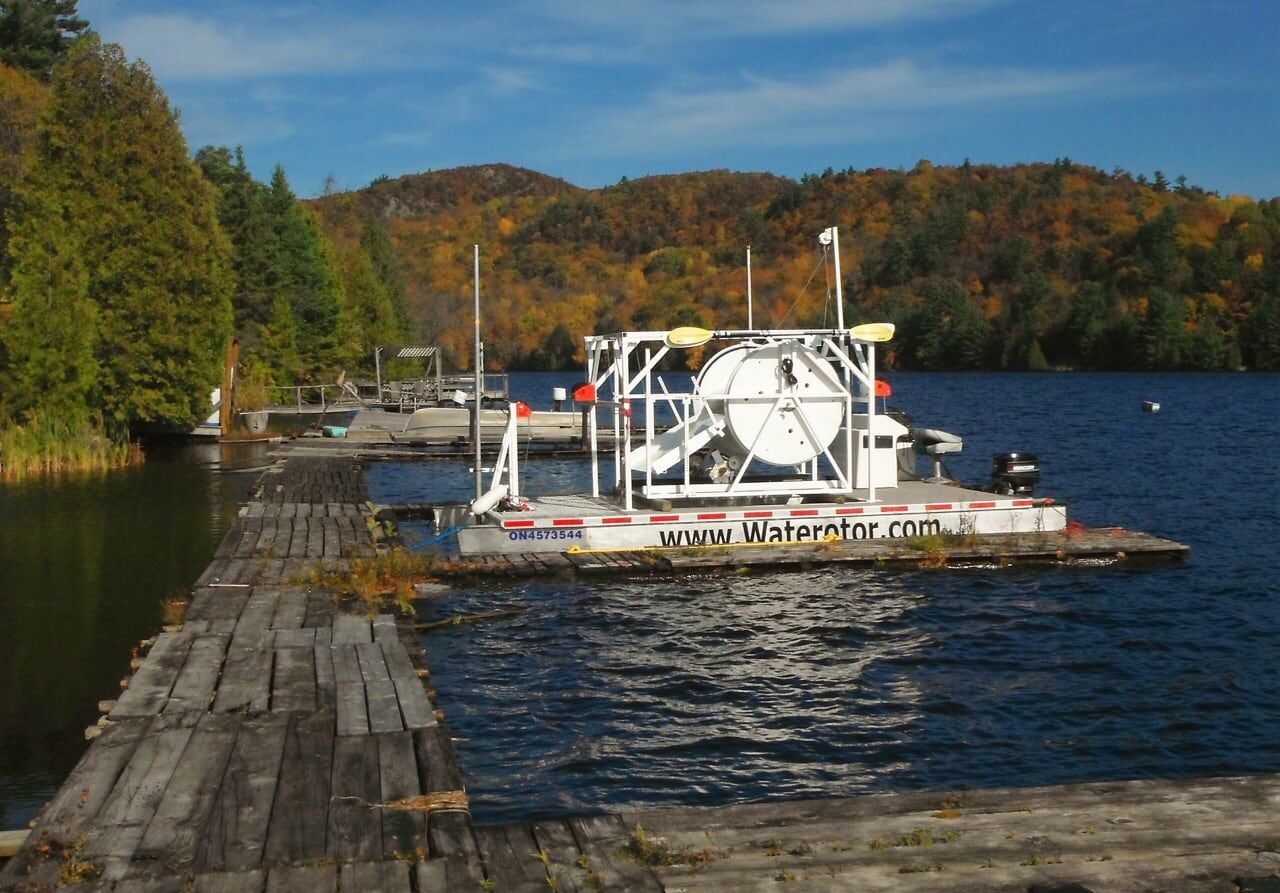
  • Waterotor test platform moored at a wooden dock on a river lined with autumn forest

    Rivers

    A continuous, predictable source of flowing water. No dams needed, even in flows as slow as 2 mph.

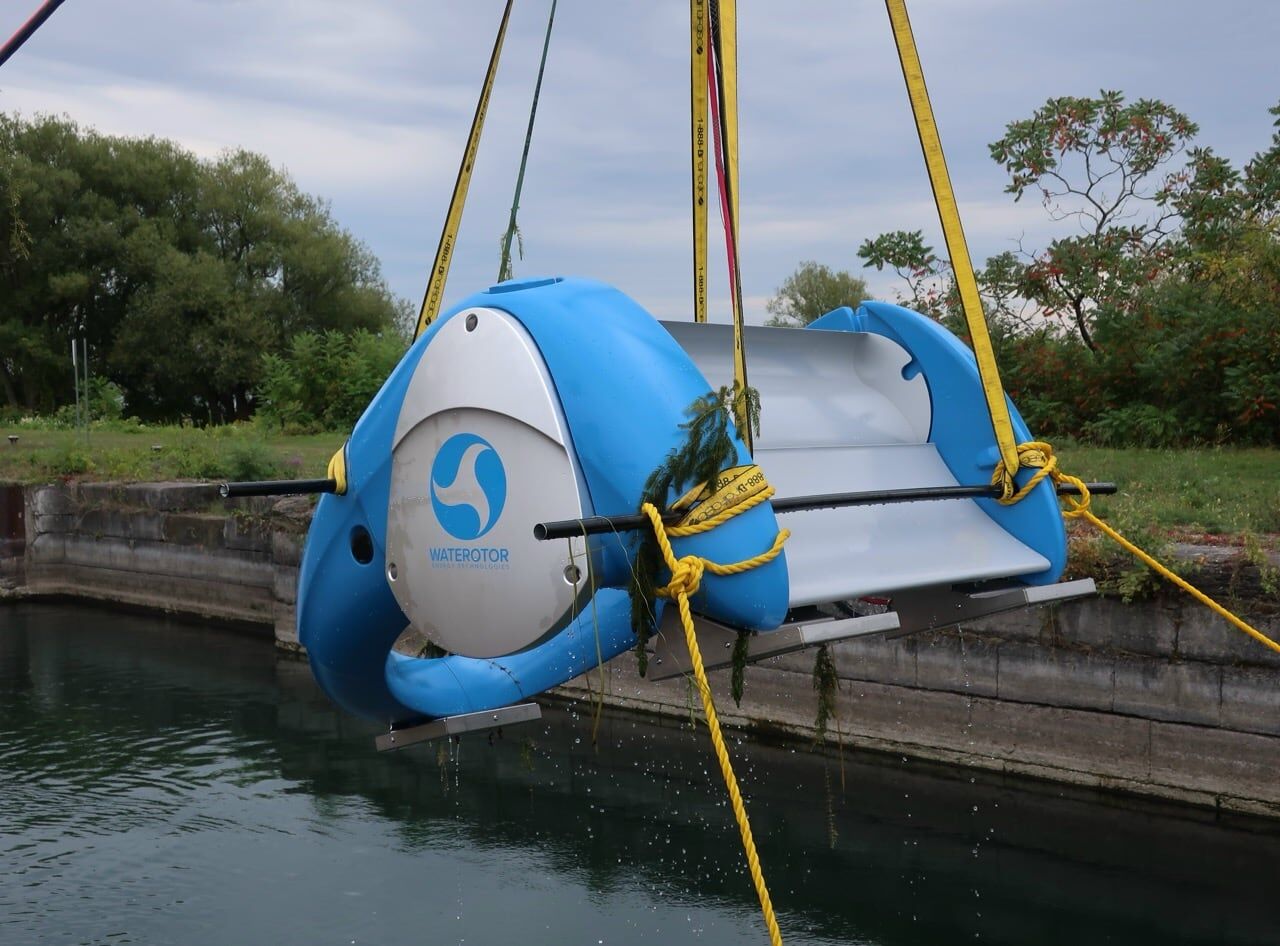
  • A blue Waterotor unit lifted by straps into a concrete-walled canal

    Canals

    A compact, modular design fits existing infrastructure, powering urban and agricultural sites.

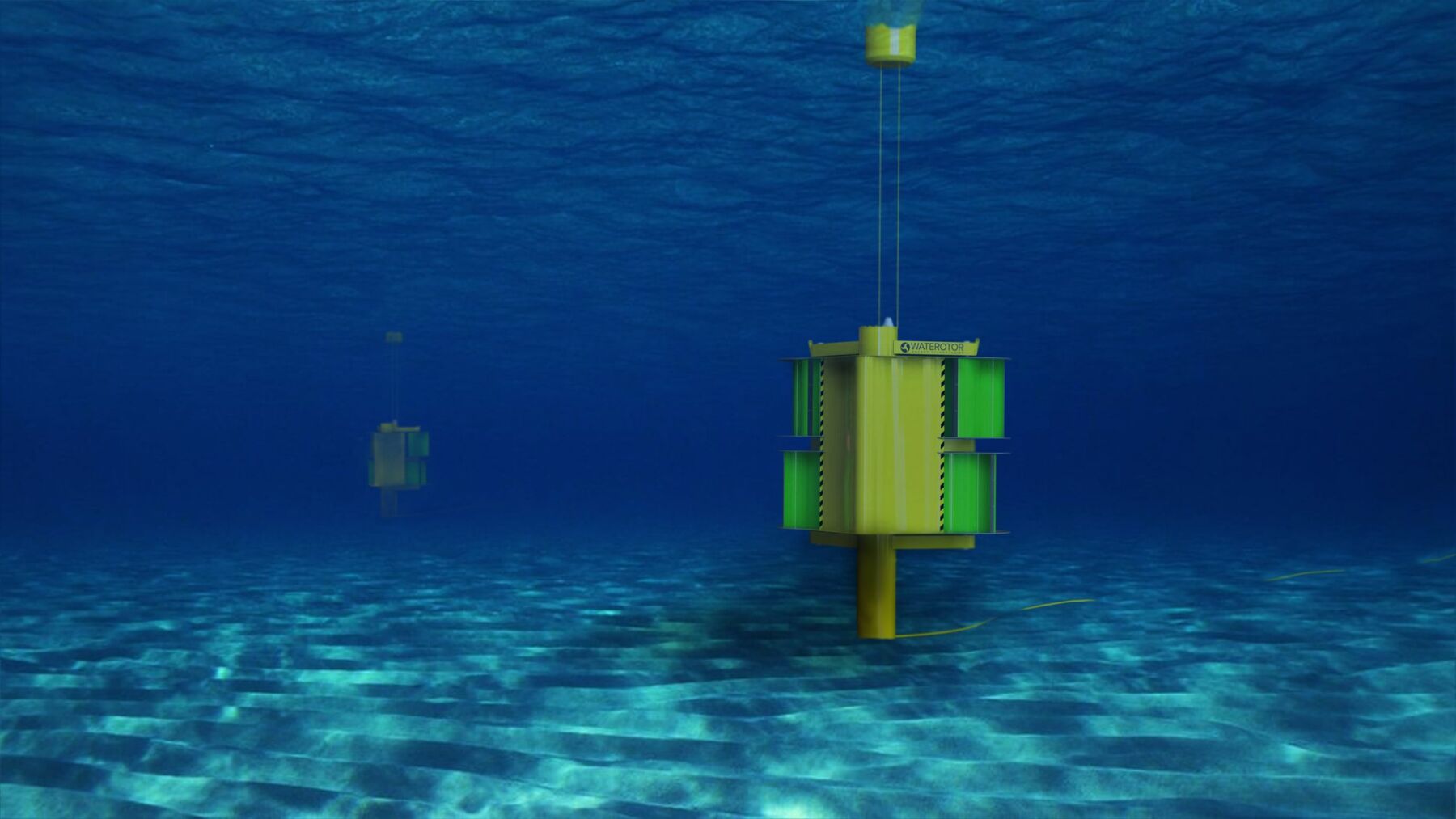
  • Rendering of a vertical Waterotor system anchored beneath the ocean surface

    Ocean currents

    Consistent currents deliver renewable energy 24/7, with no reliance on weather.

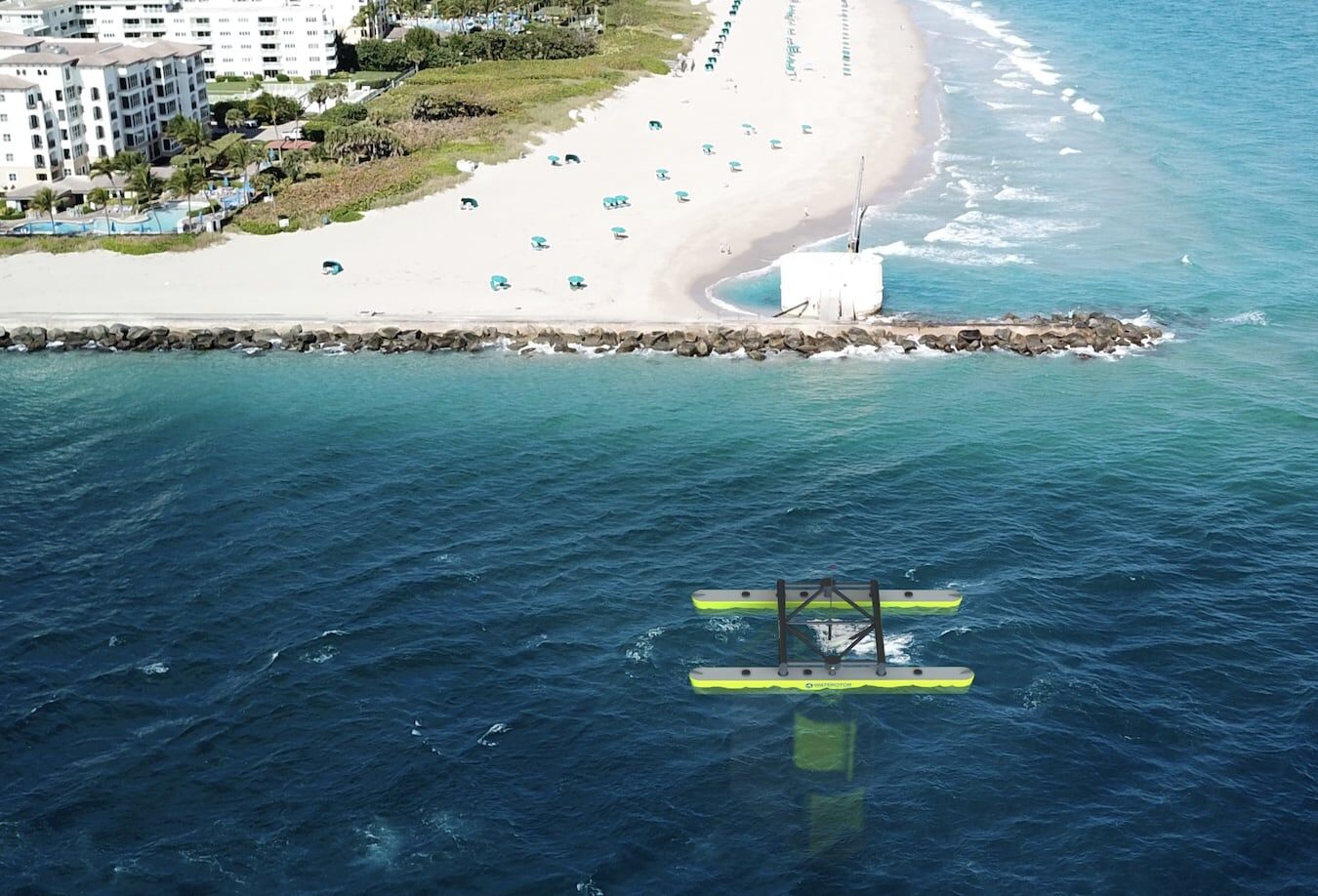
  • Aerial rendering of a Waterotor tidal platform offshore from a sandy beach and hotels

    Tidal energy

    Tides are among the most predictable renewable sources, ideal for coastal regions.

From villages to offshore platforms, one technology covers a wide range of energy needs.

  • Remote communities

    Affordable power where there is no traditional infrastructure, improving quality of life.

  • Emergency disaster relief

    Portable, renewable power for areas hit by natural disasters.

  • Low cost energy

    Electricity for people who depend on costly gas and diesel generators.

  • Offshore platforms

    Low cost, sustainable electricity for oil and gas operations at sea.

  • Industrial operations

    Reliable energy for manufacturing and processing plants where power is costly or unreliable.

  • Coastal islands

    Round-the-clock renewable energy for islands that depend on imported diesel.

The Proof

Backed by science and real-world success

Validated by leading institutions like the Canadian Hydrokinetic Turbine Test Centre, Waterotor has been independently proven to perform under real-world conditions.

  • 85%+Consistent efficiency over six months of Marine Institute flume testing
  • $25MInvested across more than 10 years of rigorous testing
  • 2 mphVerified, efficient operation at low water speeds
  • 100+Countries where Waterotor’s technology is patent protected
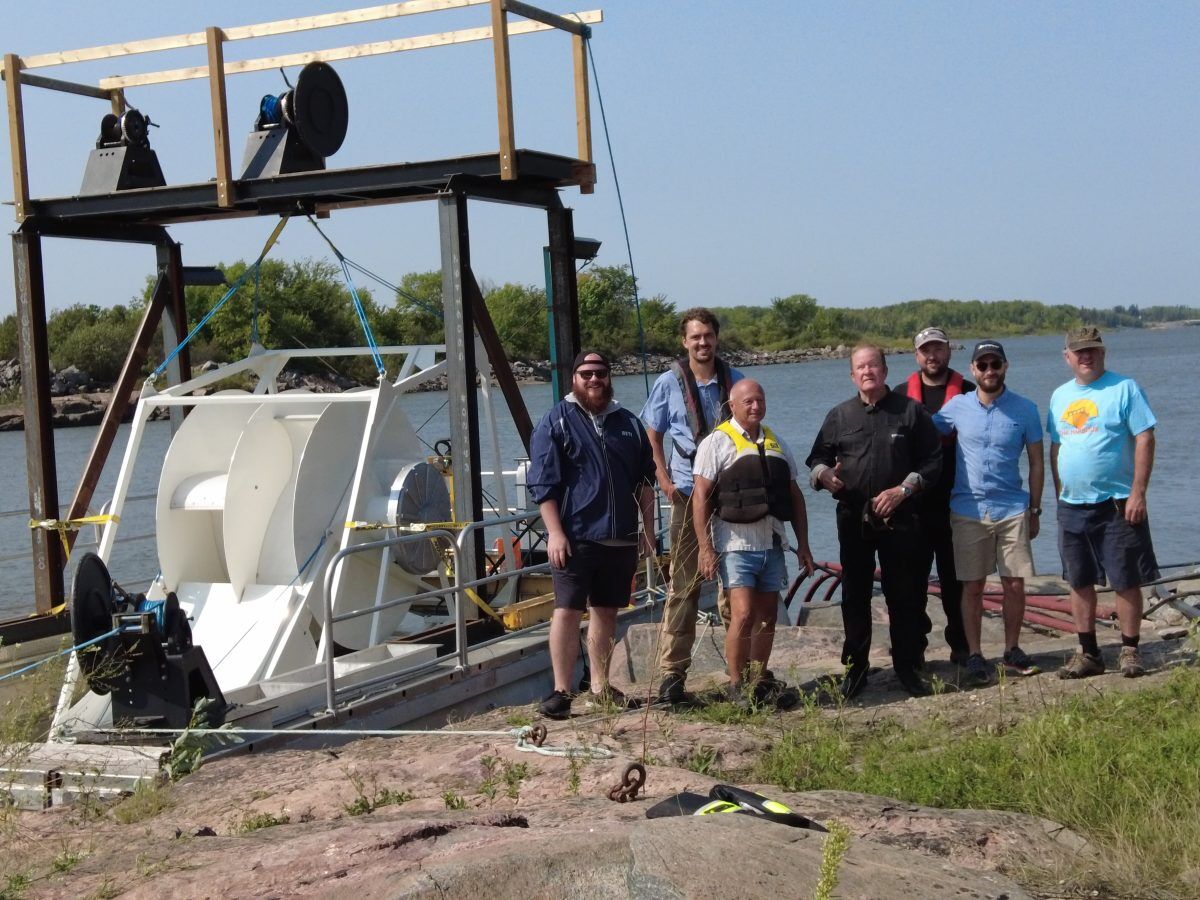
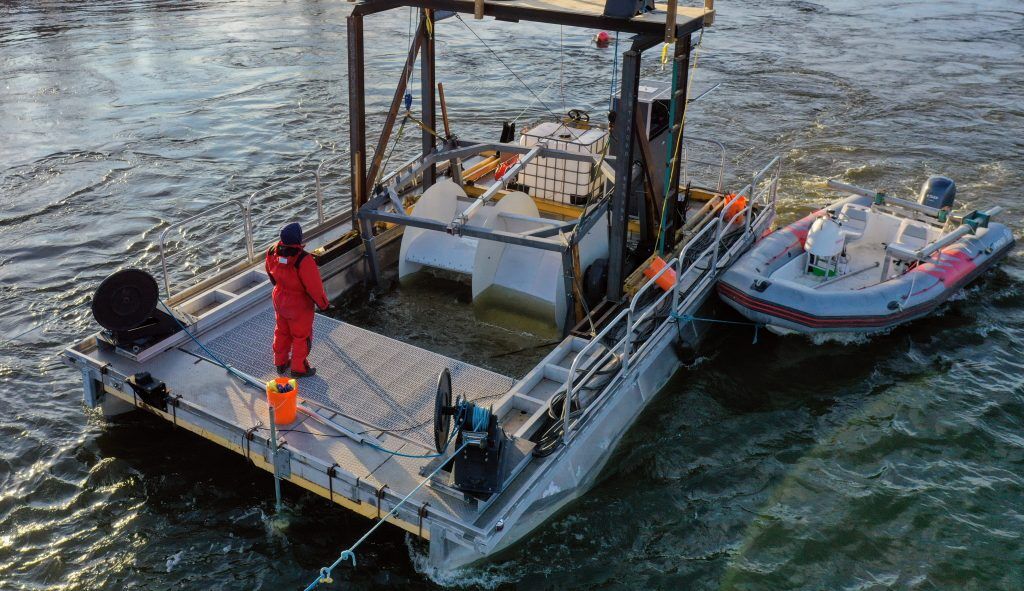
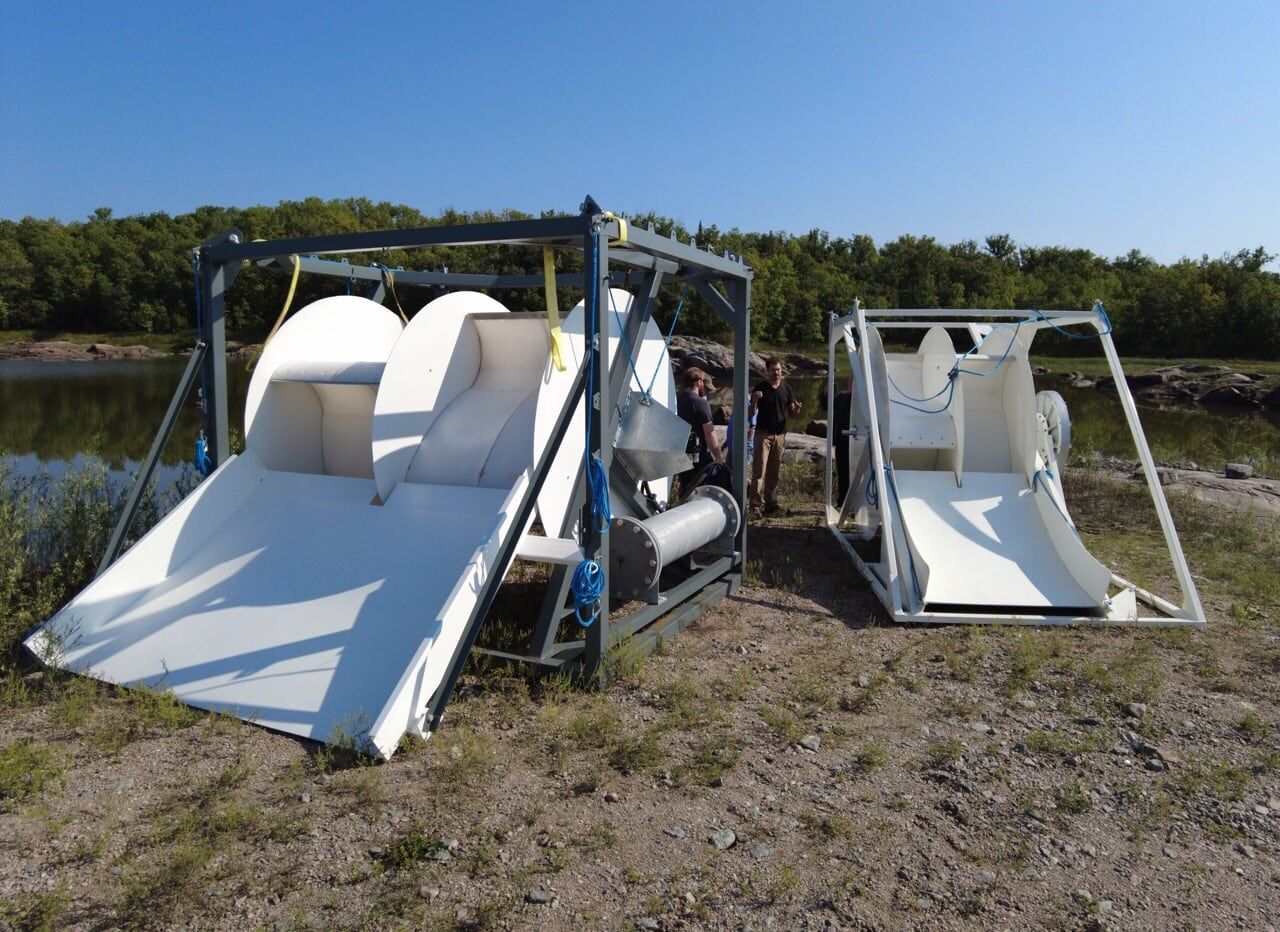
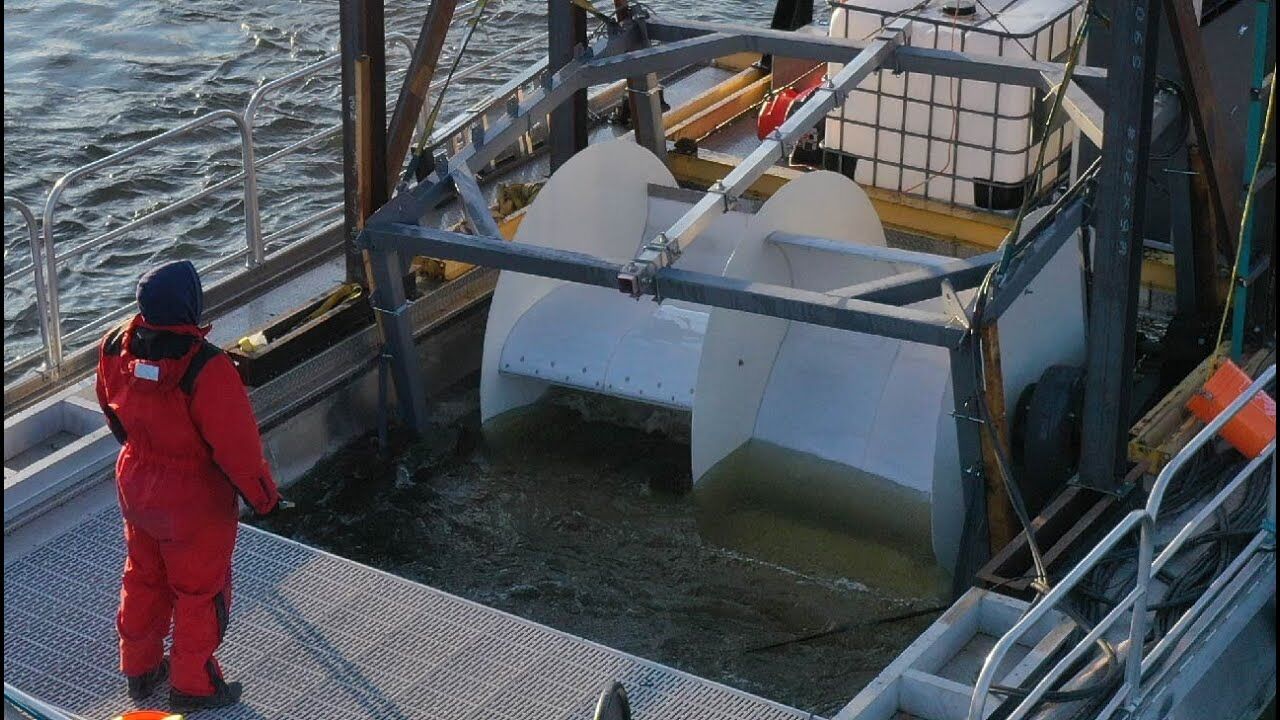
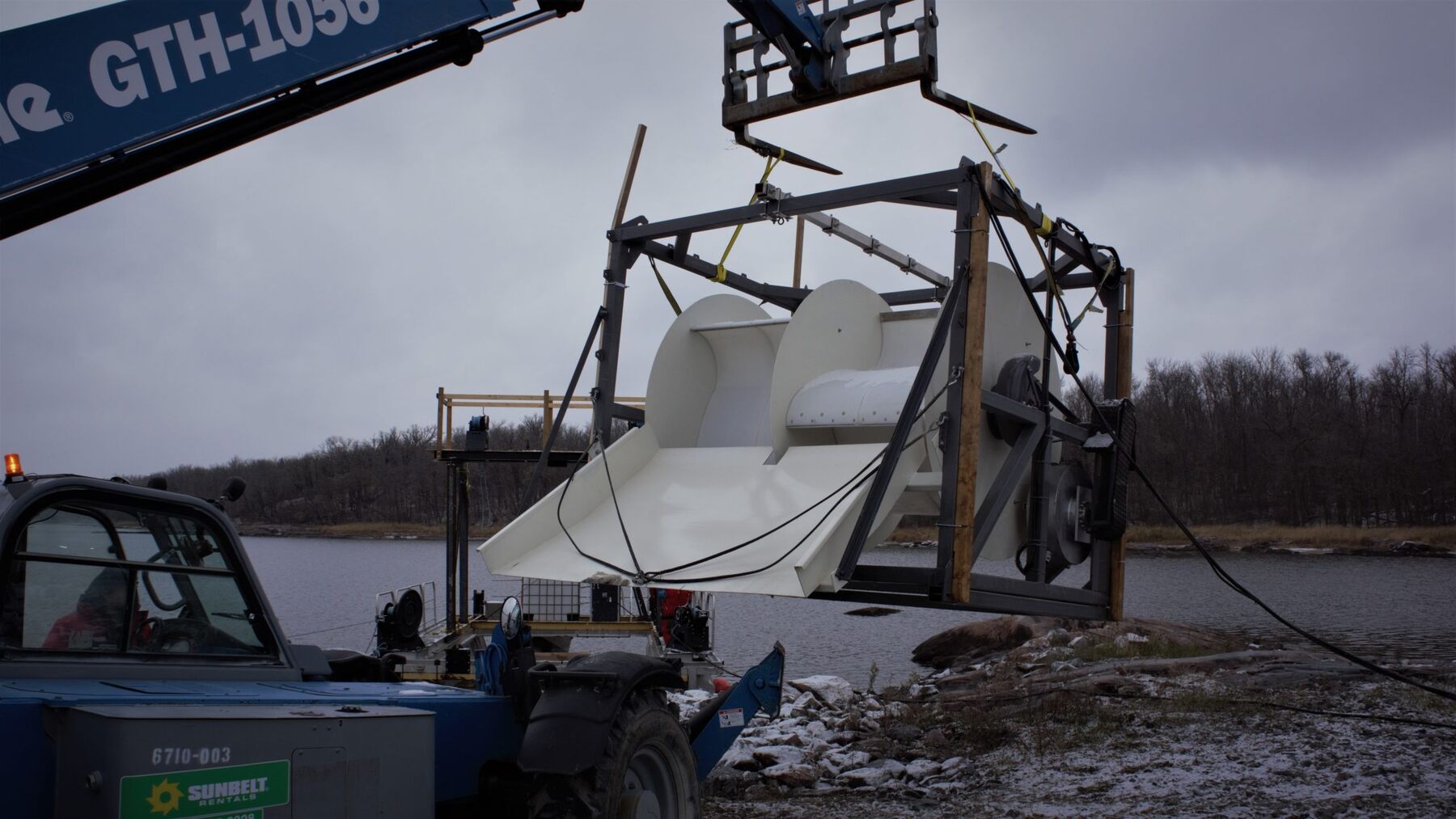
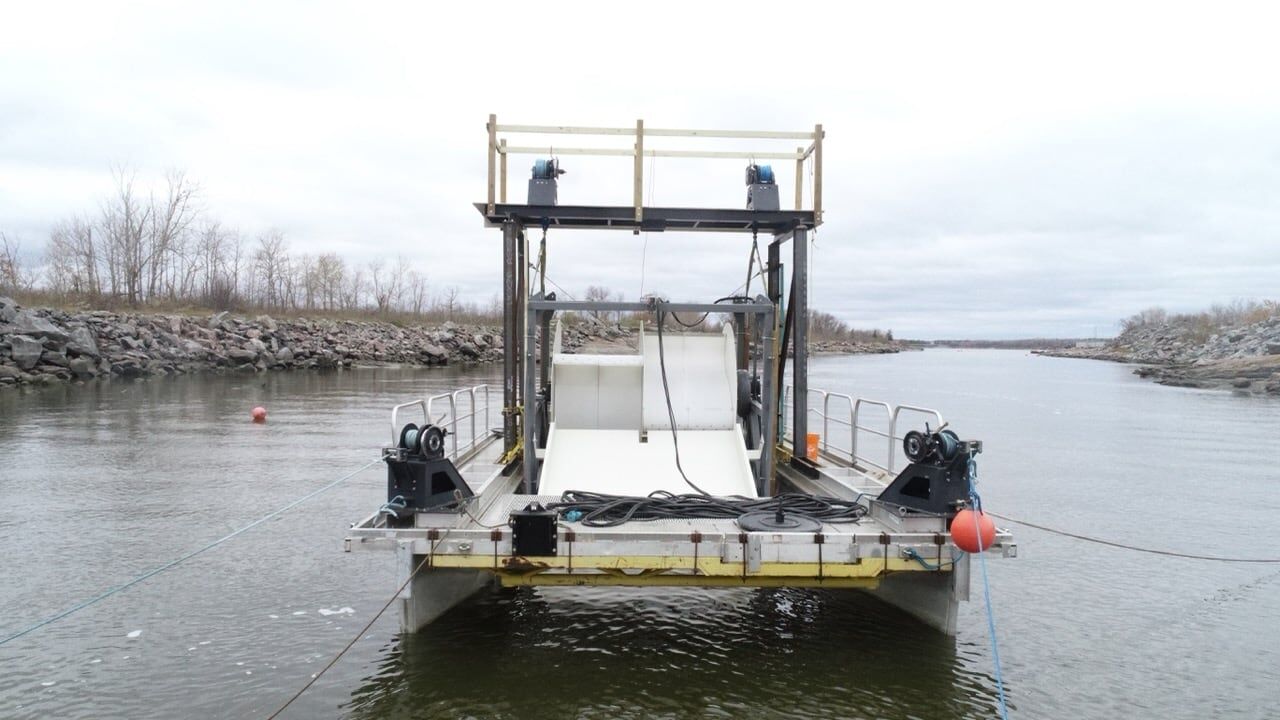
A crane lowers a white Waterotor on a test frame from the back of a truck into a cold northern river Waterotor mounted on a floating barge anchored in a river

Field test

Waterotor was tested and deployed by the Canadian Navy to power remote operations, significantly reducing reliance on fossil fuels. The turbine generated clean energy in slow water while withstanding harsh conditions, proving its reliability and portability.

  • Powered remote operations with renewable energy
  • Verified, efficient operation in water speeds as low as 2 mph
  • Withstood harsh conditions with no loss of functionality
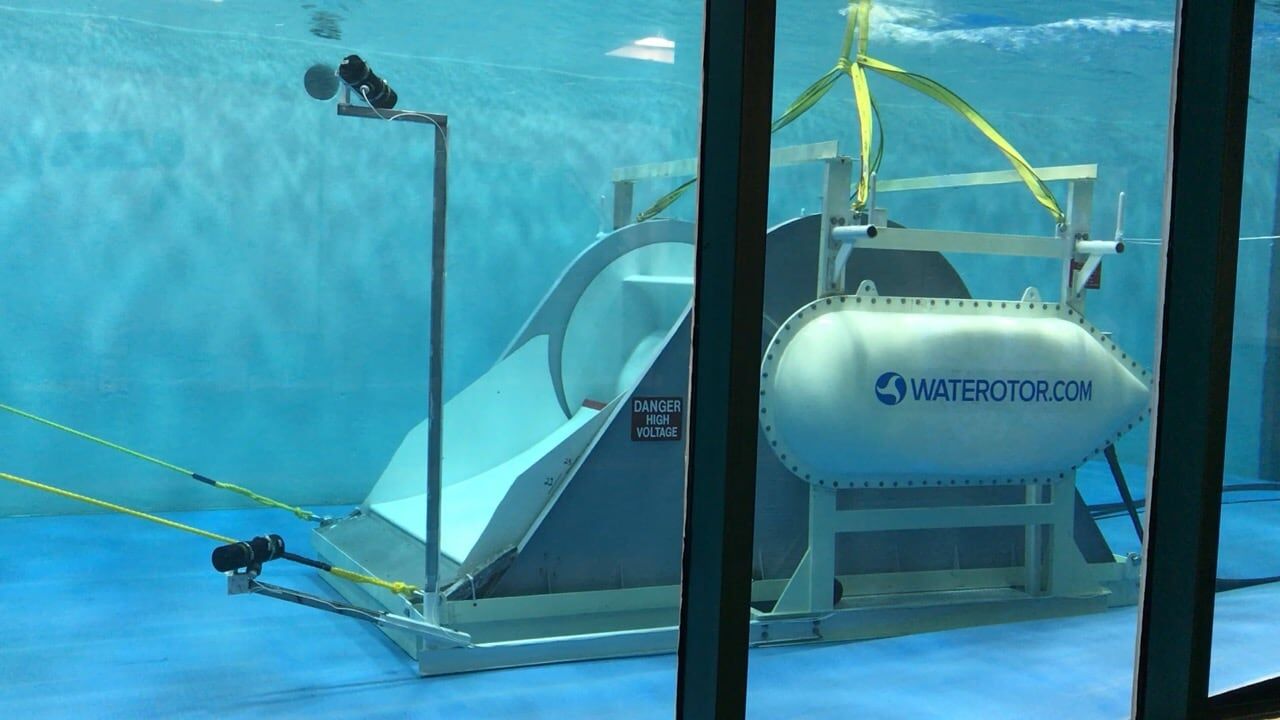
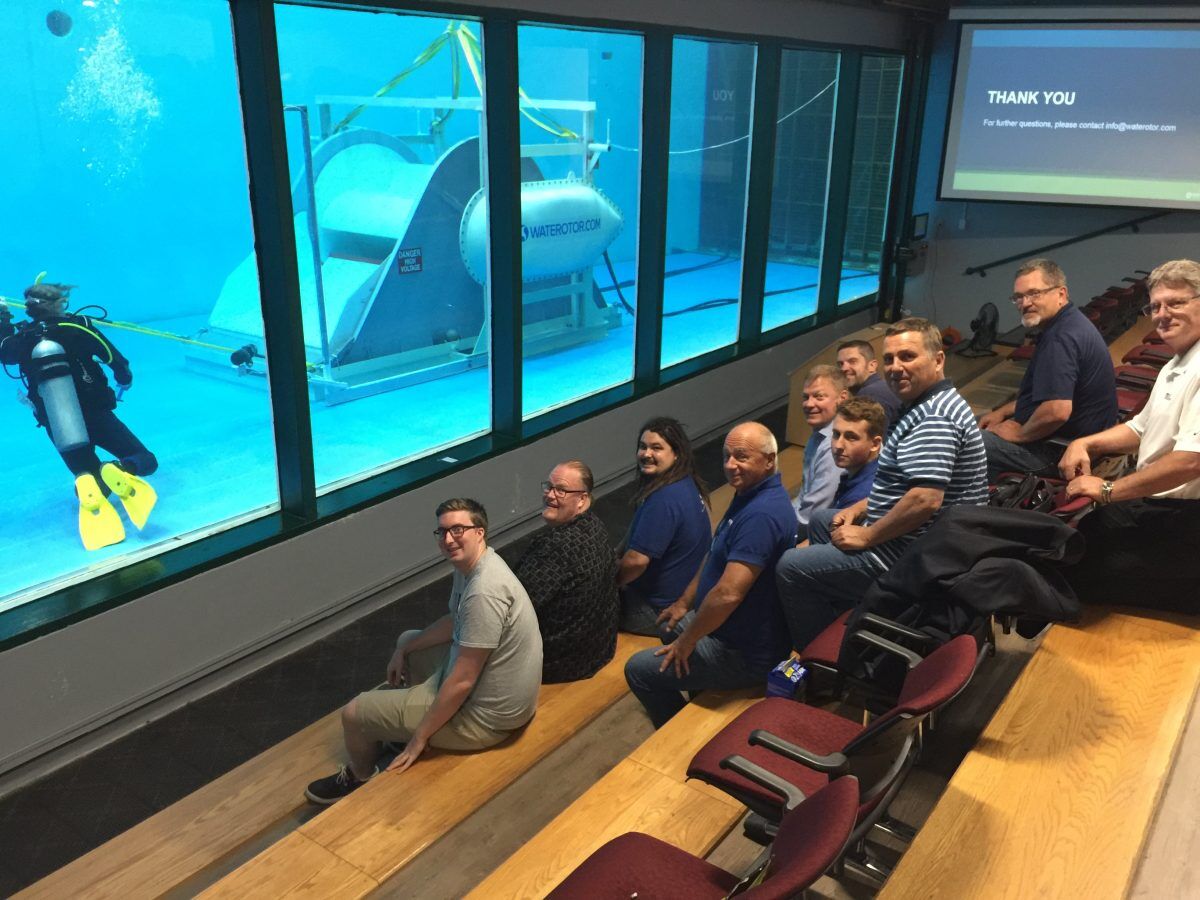
Waterotor submerged in the Marine Institute flume tank, seen through the viewing window The Waterotor team seated at the flume tank viewing gallery while a diver works beside the unit

Lab validation

Marine Institute lab tests

At the Marine Institute’s world-class flume tank in Newfoundland, Waterotor was tested under simulated real-world flow conditions. Over six months, it held a consistent efficiency rate above 85%, including in slow-moving water.

  • Results validated by independent marine energy experts
  • No harm to marine life or ecosystems during operation
  • Scalability confirmed for rivers through to ocean currents

From the field

More than a decade of prototypes, river trials and lab work, from the first MK1 to today’s V-12.

The Opportunity

A $2 trillion energy market

From rural villages to offshore platforms, Waterotor provides scalable solutions to the global demand for clean energy. We tap a vast, untouched resource: moving water.

Discover the full opportunity

$2 trillion.Projected renewable energy market by 2030, growing 17%

  • 1.18 BillionPeople considered energy poor, unable to use electricity effectively
  • 510 GWGlobal renewable power capacity additions, an expansion of about 50%
  • 660 MillionPeople projected to still lack electricity access in 2030

The challenge today

$0.75+per kWh

High costs in remote areas
Many communities rely on expensive diesel generators, making electricity unaffordable for millions.
Environmental impact
Dams and high-speed turbines often disrupt ecosystems and harm marine life.

With Waterotor

$0.05to $0.10 per kWh

Affordable and scalable
Significantly lower costs for remote regions, with units that scale from 1 kW to utility arrays.
Environmentally friendly
Designed to run without harming marine ecosystems or disrupting natural waterways.
Global Reach, Local Impact

Suited to every kind of market

  • Europe

    A strong market for meeting ambitious carbon reduction targets.

  • North America

    Modernizing infrastructure across rural, coastal and industrial areas.

  • Asia

    Rapid urbanization and growing demand need cost-effective solutions.

  • Africa

    Affordable electricity for rural communities, fueling development.

Our Journey

Key milestones

Fourteen years of design, independent validation and deployment, from a first prototype in Ottawa to a tidal pilot in the Bay of Fundy.

  1. Founded, and the first prototype (MK1)

    Waterotor Energy Technologies Inc. is established in Ottawa. The MK1 generates energy from currents as slow as 1.5 mph.

  2. Research and development

    Design of the first large-scale turbine and patents secured for the blade design.

  3. Larger fiberglass prototype (MK2)

    Built with Canadian Composite and Black and McDonald, with first lab testing in the Marine Institute flume tank.

  4. Commercial sample (MK3)

    A smaller system designed and built entirely by 3D printer with Design 1st in Ottawa.

  5. Independent validation

    • First third-party validation report, Marine Institute
    • First vertical system river testing
    • First grid connection with the Design 1st unit
    • Winter endurance test, 2019 to 2020
  6. The 5 kW “cube” (MK4)

    Built and tested at the Canadian Hydrokinetic Turbine Test Centre.

  7. $1.1M Canadian Navy contract

    First customer purchase of five units: one 5 kW and four 1 kW.

  8. Vertical systems

    Big Cajun and V-12 designs with Herman Shellstede and Associates.

  9. V-12 construction

    V-6 floating system design, then a new tidal system.

  10. Bay of Fundy tidal pilot

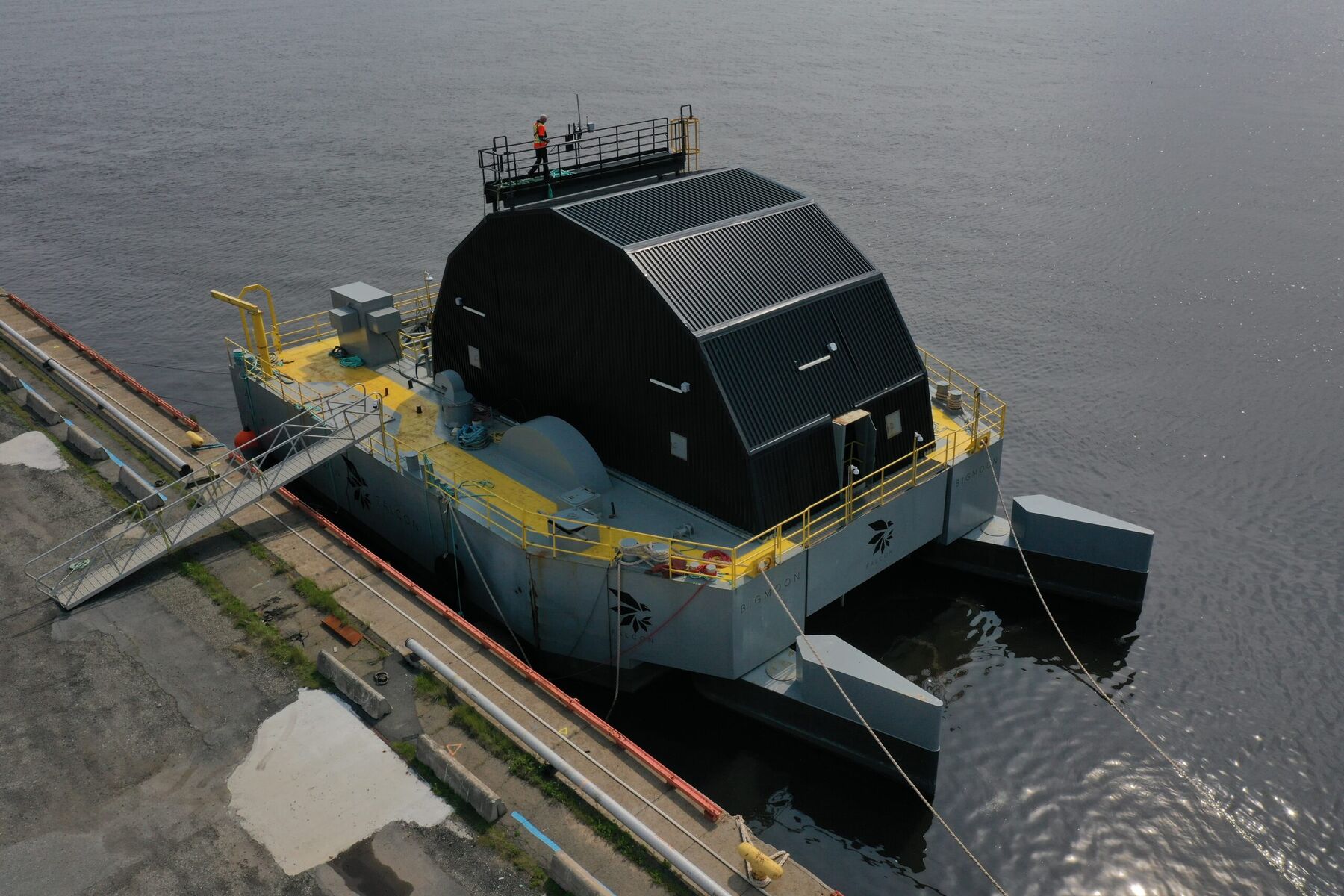
    Waterotor technology retrofitted to The Falcon with Oceanetic Power.

The Team

Led by innovators and experts

With decades of experience in renewable energy, engineering and business strategy, our team is dedicated to transforming how the world generates energy.

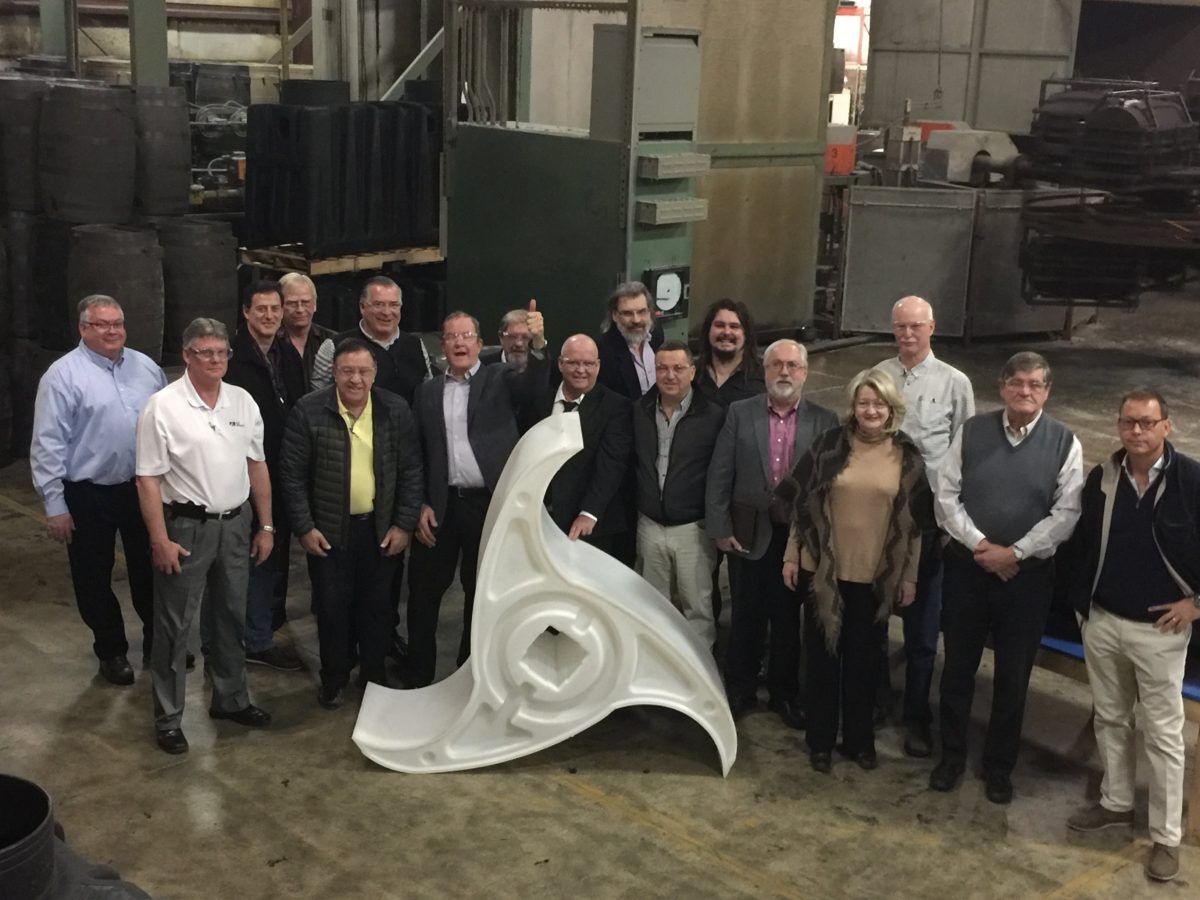
The Waterotor team and partners gathered around a white Waterotor blade in a workshop
  • Portrait of Fred Ferguson

    Fred Ferguson

    CEO and CTO, Founder and Inventor

    Read bio

    With over 35 years as a business leader, Fred has developed multiple breakthrough renewable energy technologies. As founder of Magenn Power, he created a helium-filled air rotor that converted wind energy into electricity. He previously led a $500M Lockheed Martin project and received the Canadian Government’s Industry Award for Excellence in Invention. A Tiger21 member, he has attracted five additional Tiger21 investors to Waterotor.

  • Portrait of Terry A. Lyons

    Terry A. Lyons

    Chairman of the Board

    Read bio

    An accomplished executive in natural resources, finance and corporate leadership, Terry is Chairman of Sprott Resource Corp. and Polaris Materials and a director at Martinrea International. A retired Managing Partner of Brookfield Asset Management, he played a key role in major acquisitions including the Northgate Minerals and AuRico Gold merger. He received the INCO Medal for distinguished service in mining and serves on the Advisory Board of the Richard Ivey School of Business.

  • Portrait of David Laird

    David Laird

    Chief Financial Officer

    Read bio

    David spent more than 16 years as a senior advisor for corporate finance and M&A transactions at PricewaterhouseCoopers. With 20 years as a finance and operations executive in tech and aerospace, he brings deep experience scaling innovative technologies. At Waterotor he supports governance and strategic financial planning.

  • Portrait of Stephen A. Smith

    Stephen A. Smith

    Vice President of Finance

    Read bio

    A Waterotor shareholder, Stephen specializes in corporate finance, tax planning and structuring tax-efficient investment vehicles. A graduate of the Sprott School of Business at Carleton University, he spent 16 years as a corporate accountant for multimillion-dollar companies in land development, retirement homes and agriculture, working closely with corporate banks, legal advisors and auditors at BDO Canada.

  • Portrait of Jonathan Paquette

    Jonathan Paquette

    Vice President

    Read bio

    Jonathan brings over a decade of retail management experience, consistently leading sales teams to exceed targets in profitability, service and efficiency. As Vice President at Waterotor, he oversees operations, programs and personnel, and plays a key role in commercializing the company’s water energy technology.

  • Portrait of Thomas Wolstenholme

    Thomas Wolstenholme

    Chief Engineer

    Read bio

    Tom is a multidisciplinary mechanical systems consulting engineer with a particular aptitude for specialized science applications. He has extensive experience in mechanical systems engineering and low-pressure gas systems, a skill he has applied working with Fred since 1996 on lighter-than-air technologies.

  • 90%Increase in energy efficiency since inception
  • 100+Countries with patent protection
  • Foresight 50, 2023. One of Canada’s 50 most investible cleantech ventures
  • U.S. Patent Office. Featured as a revolutionary new era in energy capture

“Canadian company Waterotor has designed new, disruptive clean tech to produce low cost electricity from slow moving water.”

Forbes Read the feature by Robert Reiss (opens in a new tab)
Investment Opportunity

Invest in a greener future

Join us in scaling the next generation of renewable energy. With proven technology and growing global demand, Waterotor offers a compelling investment opportunity.

  • Rapid scalability

    Our licensing model enables fast growth and market penetration, with steady revenue from fees and royalties.

  • Significant revenue

    The renewable energy market is projected to grow 17% to $2 trillion by 2030.

  • Protected innovation

    Patents spanning over 100 countries safeguard the technology and your investment.

  • A track record of early success

    Partnerships with the Canadian Navy and Lockheed Martin validate the technology’s reliability.

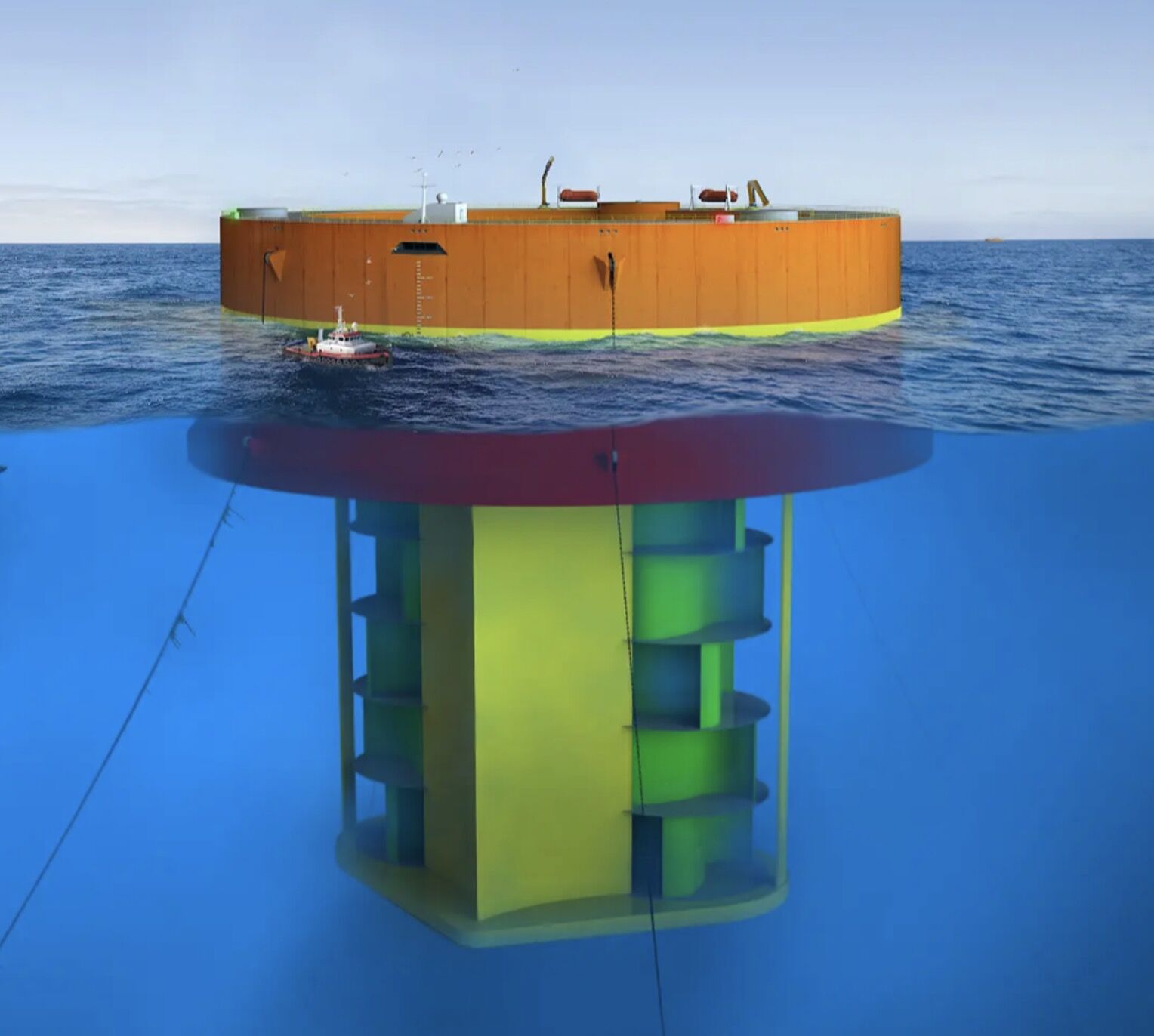
Rendering of a vertical Waterotor ocean system suspended beneath a round floating platform
$5MRaise to scale production, expand licensing and develop the Big Cajun ocean deployment system.
  1. Express interest

    Fill out our investor form to get started.

  2. Meet our team

    Discuss the opportunity with our experts.

  3. Complete legal agreements

    Finalize the documentation to proceed.

  4. Receive your share certificate

    Self-directed RRSP and TFSA investors can hold Waterotor shares tax-free.

News and Events

The latest from Waterotor

All articles
FAQs

Questions, answered

Common questions about Waterotor’s technology and its benefits. Can’t find what you need? Get in touch.

What are the features and benefits of the Waterotor?

Waterotor generates electricity in slow moving water, below 6.5 mph, where no other in-water technology has been proven. It uses no fuel, produces no emissions during operation, has low ecological impact and can replace technologies that generate CO2 and other pollutants. The small 1,000 watt Waterotor is designed to be deployed as a standalone unit.

It is simple to operate and easy to maintain, making it well suited to regions with little infrastructure. Early markets include coastal communities, remote ocean islands and isolated rural sites where diesel power often costs $0.75 or more per kWh.

What are the advantages of the 1,000 watt Waterotor over the competition?

No other technology has proven profitable operation in water moving slower than 6.5 mph. Waterotor has proven both operation and low cost economics across the 2 to 6.5 mph range.

  • Portable: fits in the back of a truck, with up to 20 units in an ISO container
  • Assembled on site, with sand or concrete poured into two side molds to hold it in place in currents up to 2.68 m/s
  • Needs only minimal water depth
  • Easily relocated by two or three people
  • Rotomolded plastic that will not corrode in salt water, with high grade stainless steel components
  • No fuel costs, generating power at around $0.05 to $0.10 per kWh, compared with diesel at 5 to 10 times the price
  • Generates power 24/7, while wind or solar average about 20% of peak output per day
Will Waterotor harm fish and marine life?

Waterotor is a low impact technology. Its slow rotation is fish-friendly: the Ferguson blades and central drum turn in a rolling motion at the speed of the river, creating a “water cushion” that helps fish avoid contact. Rotors also smooth flow rates, reducing erosion, protecting shorelines and creating slower pools that help fish travelling against the current. There are no emissions and no significant civil engineering required.

Is Waterotor a tidal device?

Waterotors are currently designed for uni-directional, constant flow, such as major ocean currents. A new tidal system is in development, with a pilot project in the Bay of Fundy.

Will it work in a river that freezes over in winter?

Waterotor cannot operate where the submerged flow stops moving. It will work beneath a surface ice sheet if the waterway is deep enough, and it is robust and unaffected by ice particles.

How long is Waterotor designed to last?

On the 1,000 watt Waterotor, the mean time between failure for all parts is a minimum of 10 years. On larger Waterotors, all components are designed to last a minimum of 20 years. Waterotor intends to offer a one year warranty on all products.

Do I need permits for Waterotor?

Probably, if you live in North America or parts of Europe, and Waterotor is looking into those requirements. Our target markets are the 1.2 billion people who have no electricity today and the millions of homes and businesses running on diesel generators, where permits will likely be minimal or not required.

Contact

Unlock the power of water

Contact us to explore investment opportunities and learn more about our technology.